Excited-state dynamics
Thermally activated delayed fluorescence (TADF), room-temperature phosphorescence (RTP) and charge-transfer states in organic materials. The focus is on the mechanisms that govern emission and non-radiative decay.
Photophysical and electrochemical processes in organic semiconductors.
My research examines the relationship between molecular structure, excited-state dynamics and device performance. Experimental spectroscopy and electrochemistry connect the properties of individual molecules with their behaviour in thin films and electronic devices.
Thermally activated delayed fluorescence (TADF), room-temperature phosphorescence (RTP) and charge-transfer states in organic materials. The focus is on the mechanisms that govern emission and non-radiative decay.
Electrochemical and spectroelectrochemical characterisation of conjugated molecules and polymers, including the relationship between redox behaviour and the properties of optoelectronic active layers.
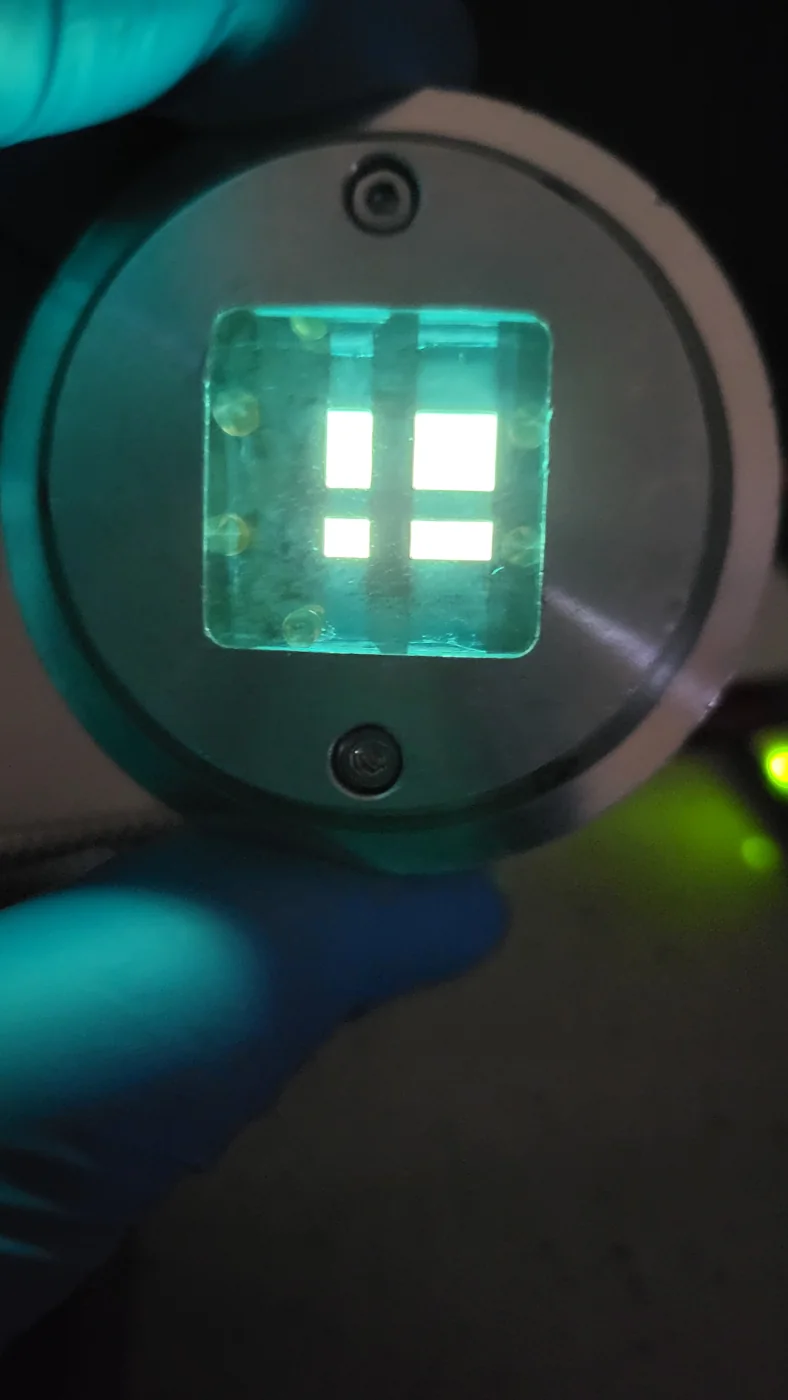
Development and characterisation of organic emitters, exciplex systems and hyperfluorescent materials. Connecting photophysical mechanisms with electroluminescence and device efficiency.
Research interests extend to organic thermoelectrics, redox-active storage interfaces and coupled light–heat–charge processes. These directions build on existing expertise in spectroscopy, electrochemistry and organic electronic materials.
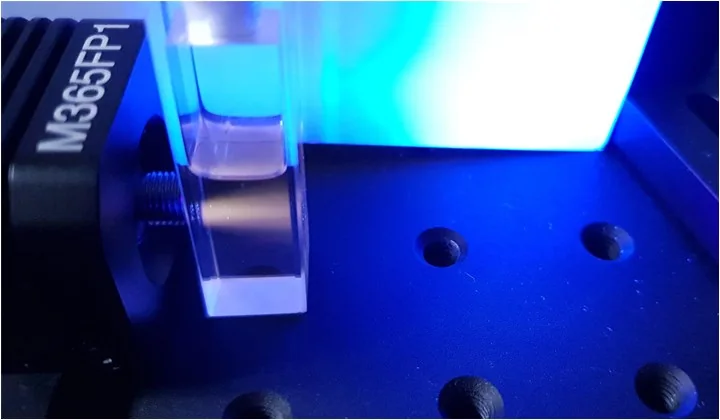
Electrochemistry and spectroelectrochemistry; steady-state and time-resolved spectroscopy; thin-film preparation; OLED fabrication and characterisation.
EXCITED-STATE PHOTOPHYSICS
Thermal energy enables reverse intersystem crossing (RISC) from T₁ to S₁. Fluorescence then occurs from S₁ to S₀.
Simplified scheme · selected pathways · not to scale.
Mechanism reference